

 English
Revitalize Your Drive: Libido Boosters for Men
Let’s face it: when it comes to libido, most guys would rather crank up the heat than cool things down. But life happens. Stress, lack of sleep, exposure to endocrine disruptors, too many fast-food runs, or just the natural effects of aging can all put the brakes on your bedroom mojo. The good news? Nature’s got your back.
From ancient herbal tonics to modern-day supplements, natural health products have long been used to boost male libido, energy, and performance. In fact, across cultures and traditions, plant-based remedies have been passed down for generations to help men maintain vitality, stamina, and reproductive health. Whether you want to reignite the spark, amp up your endurance, or simply feel like your former self again, there’s a whole world of natural solutions worth exploring.
Let’s break down the four best natural boosters for male libido, what science says about them, and how to choose the right ones for your needs. Ready to bring the fire back? Let’s dive in.
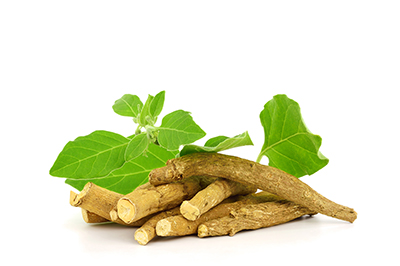
Ashwagandha
Ashwagandha (Withania somnifera), also called “Indian Ginseng,” is one of the most important herbs in Ayurveda.[1] It is considered an adaptogen, which means it helps the body adapt to stress while restoring balance and resilience. Traditionally, ashwagandha is used to boost energy, improve sleep, support fertility, and enhance vitality.
Modern research now connects ashwagandha with improvements in male sexual health. In an eight-week randomized, double-blind, placebo-controlled trial involving healthy men aged 30–50, participants who took 300 mg of ashwagandha root extract twice daily showed significant improvements in orgasm and sexual desire compared to placebo.[2]
Another study followed 43 overweight men between the ages of 40 and 70. After eight weeks of supplementation, compared to placebo, men taking ashwagandha extract demonstrated a 14.7% increase in testosterone and an 18% increase in dehydroepiandrosterone (DHEA). DHEA is a hormone made by the adrenal glands that helps the body produce key hormones involved in energy, resilience, and healthy aging. These men also reported improvements in markers of sexual vigour, energy, and overall wellbeing.[3] Together, these findings suggest that ashwagandha supports not only sexual health but also hormone balance and resilience to stress.
Fenugreek
Fenugreek (Trigonella foenum-graecum, from the Fabaceae family) is a leguminous plant with a long history of use as both food and medicine. It grows widely in Argentina, China, Egypt, France, India, Iran, Morocco, Spain, and Turkey, with India leading production. For centuries, fenugreek has been prized in Ayurvedic and Unani medicine for its wide-ranging benefits, from aiding digestion and blood-sugar balance to acting as an anti-inflammatory and aphrodisiac.[4]
Modern science backs up many of these traditional uses. In a six-week double-blind, placebo-controlled trial, healthy men who took 600 mg per day of a standardized fenugreek extract / mineral blend (Testofen®) experienced significant improvements in libido, sexual arousal, and orgasm compared to placebo.[5]
Another study tested a patented fenugreek seed extract (Furosap™) in men ages 35–65 over a 12-week period. Results showed increases in free and total testosterone, sperm count, mood, and libido.[6] The evidence suggests that fenugreek not only enhances testosterone but also supports reproductive health and emotional wellbeing—two factors closely linked to a satisfying sex life.
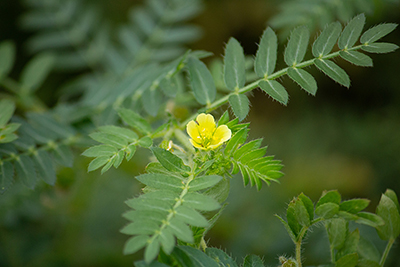
Puncturevine
For centuries, puncturevine (Tribulus terrestris) has been valued in traditional medicine systems such as Ayurveda and Chinese medicine. Known as a tonic for vitality, it has been used to support strength, energy, and male reproductive health.
In modern trials, puncturevine also shows promise. A 12-week randomized, double-blind, placebo-controlled trial in 86 men with mild to moderate erectile dysfunction found that Tribulus terrestris extract significantly improves scores on the International Index of Erectile Function (IIEF). Participants reported greater intercourse satisfaction (p = 0.0005), improved orgasmic function (p = 0.0325), and stronger sexual desire compared to placebo.[7]
A study further investigated the herb’s effects. Seventy men with erectile dysfunction were divided into two groups: 35 received Tribulus terrestris three times daily for three months, while the other 35 received placebo. The Tribulus group showed significant increases in testosterone, improved erectile function scores, and higher values on the validated Arabic index of erectile function. They also demonstrated mild increases in prostate-specific antigen and liver enzyme levels, which highlighted the importance of professional supervision when using herbal supplements.[8]
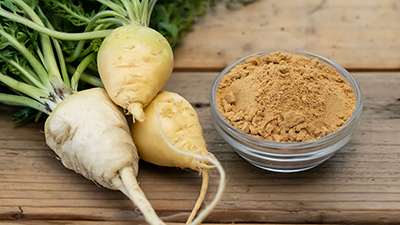
Maca
Maca (Lepidium meyenii), also known as Peruvian ginseng, grows high in the Andes and has been used for thousands of years as a food and a medicine. Traditionally, it serves as a fertility enhancer for humans and livestock, as well as a remedy for conditions like rheumatism, respiratory illness, and anaemia.[9] Over the past two decades, maca has become one of the most popular natural supplements for supporting energy, fertility, and libido.
In a pilot study, eight men took maca extract for 14 days and reported significant improvements in self-rated sexual desire compared to both baseline and placebo.[10]
A larger, 12-week randomized, double-blind, placebo-controlled trial further explored maca’s effects in more detail. Men aged 21–56 received either 1,500 mg or 3,000 mg of maca daily, or placebo. By week eight, participants taking maca reported significantly higher sexual desire. Interestingly, these improvements occurred independently of changes in mood or testosterone levels, suggesting that maca works through unique mechanisms that may directly influence sexual function and desire.[11]
Final Thoughts
When things cool off in the bedroom, it’s hard to ignore it. Low libido doesn’t just affect intimacy—it can ripple into mood, confidence, and even overall health. But nature has your back. From ashwagandha’s stress-fighting power to fenugreek’s testosterone support, plus the performance perks of Tribulus and maca, these plant-based allies aren’t just hype: they’re supported by both tradition and science.
Of course, no single herb is a magic bullet. A healthy lifestyle that includes good nutrition, regular exercise, quality sleep, and stress management creates the foundation for sexual vitality. But adding natural boosters, under the guidance of a qualified health-care practitioner, can provide the extra edge you need to feel more energized, more confident, and more connected.
If you’re ready to turn up the heat, these natural libido boosters are worth exploring with the guidance of a trained health-care practitioner. So, if your spark’s been flickering, you now have some science-backed, time-tested ways to fire it back up!

Dr. Colleen Hartwick, ND
Dr. Colleen Hartwick is a licensed naturopathic physician practising on North Vancouver Island, BC, with a special interest in trauma as it plays a role in disease.
campbellrivernaturopathic.com
References
[1] J. Salve, S. Pate, K. Debnath, and D. Langade. “Adaptogenic and anxiolytic effects of ashwagandha root extract in healthy adults: A double-blind, randomized, placebo-controlled clinical study.” Cureus 11, no. 12 (2019): e6466.
[2] A.S. Mutha, S.A. Mutha, A.H. Tejuja, A.S. Beldar, A.M. Mulay, and D. Langade. “Efficacy and safety of eight-week therapy with ashwagandha root extract in improvement of sexual health in healthy men: Findings of a prospective, randomized, double-blind, placebo-controlled study.” Journal of Ayurveda and Integrative Medicine 16, no. 4 (2025): 101155.
[3] A.L. Lopresti, P.D. Drummond, and S.J. Smith. “A randomized, double-blind, placebo-controlled, crossover study examining the hormonal and vitality effects of ashwagandha (Withania somnifera) in aging, overweight males.” American Journal of Men’s Health 13, no. 2 (2019): 1557988319835985.
[4] A. Maheshwari, N. Verma, A. Swaroop, M. Bagchi, H.G. Preuss, K. Tiwari, and D. Bagchi. “Efficacy of Furosap™, a novel Trigonella foenum-graecum seed extract, in enhancing testosterone level and improving sperm profile in male volunteers.” International Journal of Medical Sciences 14, no. 1 (2017): 58–66.
[5] E. Steels, A. Rao, and L. Vitetta. “Physiological aspects of male libido enhanced by standardized Trigonella foenum-graecum extract and mineral formulation.” Phytotherapy Research 25, no. 9 (2011):1294–1300.
[6] A. Maheshwari et al, op. cit.
[7] Z. Kamenov, S. Fileva, K. Kalinov, and E.A. Jannini. “Evaluation of the efficacy and safety of Tribulus terrestris in male sexual dysfunction-A prospective, randomized, double-blind, placebo-controlled clinical trial.” Maturitas 99 (2017): 20–26.
[8] S.F. GamalEl Din, M.A. Abdel Salam, M.S. Mohamed, A.R. Ahmed, A.T. Motawaa, O.A. Saadeldin, and R.R. Elnabarway. “Tribulus terrestris versus placebo in the treatment of erectile dysfunction and lower urinary tract symptoms in patients with late-onset hypogonadism: A placebo-controlled study.” Urologia Journal 86, no. 2 (2018): 74–78.
[9] S. Beharry and M. Heinrich. “Is the hype around the reproductive health claims of maca (Lepidium meyenii Walp) justified?” Journal of Ethnopharmacology 211 (2018): 126–170.
[10] M. Stone, A. Ibarra, M. Roller, A. Zangara, and E. Stevenson. “A pilot investigation into the effect of maca supplementation on physical activity and sexual desire in sportsmen.” Journal of Ethnopharmacology 126, no. 3 (2009): 574–576.
[11] G.F. Gonzales, A. Córdova, K. Vega, A. Chung, A. Villena, C. Góñez, and S. Castillo. “Effect of Lepidium meyenii (MACA) on sexual desire and its absent relationship with serum testosterone levels in adult healthy men.” Andrologia 34, no. 6 (2002): 367–372.