

 English
My Journey with Sjögren’s Disease
Do you have dry eyes? A dry mouth? How about fatigue? Aches and pains? Me too! These common symptoms can be part of several health conditions ranging from simple dehydration to chronic diseases. One of the most serious of these ailments is Sjögren’s disease (formerly called Sjögren’s syndrome). Here is my story.
Four years ago, I was sitting in my doctor’s office while she reviewed my latest round of bloodwork. This was a follow-up visit from the week before, which was based on a referral letter from my optometrist. In this round of tests, the doctor included inflammatory markers and some specific antibody indicators. She looked up from the test results and said: “I think you have Sjögren’s disease.” All I could remember from a brief lecture I sat in on at school was that Sjögren’s was a dry disease.
The rheumatologist confirmed Sjögren’s disease six months later. I felt relieved that I didn’t have one of the more serious autoimmune
diseases. That feeling was short-lived. I learned that it isn’t as benign as I had thought. It is a progressive systemic disease which can wreak the same havoc on the body as rheumatoid arthritis or systemic lupus erythematosus. Simply put, in Sjögren’s disease, the body attacks its own moisture-secreting glands and small-fibre nerves. All organs and systems in the body can be affected. The risk of developing lymphoma, a type of cancer, is 44 times more common in someone with Sjögren’s disease.[i]
How did I get this? I knew there had to be three factors in place to develop an autoimmune disease: the autoimmune genes, a disease-conducive environment, and a trigger.[ii], [iii] There were no known autoimmune diseases in my family, although my grandmother had low thyroid function, which was likely Hashimoto’s. In hindsight, I think I did have early signs of Sjögren’s. As a teen, my eyes were dry—an optometrist once told me I didn’t blink enough. More recently, my current optometrist diagnosed dry-eye disease and put me on eye drops. I also recall struggling to speak at times when I taught groups and having to clear my throat and drink water often. Then, there were those mysterious aches and pains, and the decades of feeling exhausted. I thought it was nothing serious. And besides, my routine bloodwork and vital signs were always fine.
Then in my mid-fifties, I was hit with a lot of stress. I moved to a different province and changed jobs, then there was the pandemic and I became unemployed. My parents’ health changed, then I became an empty nester. I had a really bad reaction to the COVID vaccine, too. My lack of restorative sleep was leaving me feeling constantly fatigued and was now affecting my memory and thinking ability. Something was not right.
Nevertheless, I was lucky to be diagnosed in a timely manner. Sjögren’s is often missed as it shares symptoms with many other health conditions and there is no definitive blood test. Antibody tests can reveal the disease, but some people can have the disease without the antibodies. Because of this, it takes an average of three years to be diagnosed.[iv] It was once considered more of a “middle-aged woman’s disease”; these days, younger women as well as men and children are being diagnosed. All my symptoms could easily have been missed or explained away as menopause or aging. I was fortunate to have doctors listen to me and order the right tests.
So, after discussing medication options with the rheumatologist, I decided to take the “wait-and-see route,” since even the safest drug offered for Sjögren’s has potential side effects. Having worked with lots of autoimmune patients in my former career as a naturopathic doctor, I was confident I could substantially influence the course of my own disease.
The first step was to update my knowledge of Sjögren’s disease and find out what the current conventional and complementary therapies used to treat it were. I rushed off to my local library and, to my surprise, I found a couple of books on Sjögren’s disease, but they were outdated. I checked online and found that recent books contained only the conventional medical approach. What I needed but could not find was a book that incorporated both the standard medical and holistic approaches to Sjögren’s disease.
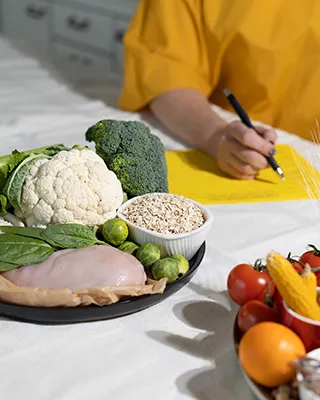
My second step was to start working on treatment. I began with an elimination diet, as I had done with so many patients in the past. I already knew two of my food sensitivities—gluten and dairy—but after doing the autoimmune protocol (AIP),[v] I also discovered eggs were causing symptoms. After a few days on the diet, my joints felt better. A couple of weeks later, my eyes and mouth were less dry. A month passed and the fatigue had lifted a little. I added in a few natural anti-inflammatory supplements such as curcumin,[vi] ginger,[vii] and omega‑3.[viii]
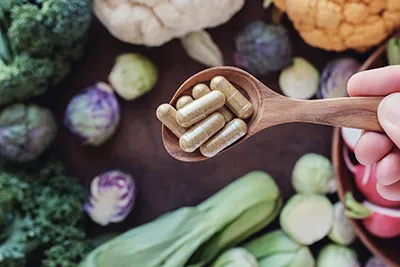
Next, I tackled my nutrient deficiencies, which are common for those living with Sjögren’s disease.[ix] These can include vitamin D,[x] omega‑3,[xi], [xii] vitamin A,[xiii] zinc,[xiv] vitamin B₁₂,[xv] folate,[xvi] and iron.[xvii] Deficiencies are specific to the person. I used a food-diary app (Chronometer), recording everything I ate for a couple of weeks. This gave me oversight on what nutrients I was routinely missing out on, so that I could target my nutrition or use supplements to fill gaps to meet my daily nutritional needs. Gut health is also important in treating Sjögren’s disease.[xviii] Working with a naturopathic doctor, we focused on healing my leaky gut. I made sure to eat a variety of fibres and fermented foods (probiotics). A caveat here: If your immune system is seriously compromised, check with a health-care practitioner before starting any probiotic foods or supplements.
In the end, the book I couldn’t find on Sjögren’s disease, I wrote it. Dry: A Holistic Guide to Sjögren’s Disease is meant to help you learn more about the disease and how to incorporate safe, evidence-based measures. My book contains nearly 200 current references, to help you understand your symptoms and condition better.
There is a lot you can do on your own to relieve your dry eyes, dry mouth, fatigue, and joint pain; whether the symptoms are part of Sjögren’s disease or another chronic disease. A diagnosis was a shock at first, but I’ve learned to manage Sjögren’s disease. You can, too.
If you are interested in finding out more, my book is available through a variety of online distributors. It is published by Friesen Press.

Wendy Presant, RHNC, CFMP
A former registered nurse and a retired naturopathic doctor with credentials in health and life coaching, Wendy is passionate about helping people over the age of 40 optimize their continuing journey through life. She enjoys writing and is the recent author of Dry—A Holistic Guide to Sjögren’s Disease.
dryhelp.ca · wendy.happyaging@gmail.com
References
[i] [No author listed.] “Sjögren’s disease fast facts.” Sjögren’s Foundation.https://sjogrens.org/understanding-sjogrens/sjogrens-disease-fast-facts. 2026.
[ii] M. Kumar, L. Yip, F. Wang, S.‑E. Marty, and C.G. Fathman. “Autoimmune disease: Genetic susceptibility, environmental triggers, and immune dysregulation. Where can we develop therapies?” Frontiers in Immunology 16 (2025): 1626082.
[iii] [No author listed.] “Disease development.” Johns Hopkins Medicine—Pathology.https://pathology.jhu.edu/autoimmune/development/. 2026.
[iv] A. Baer. “Sjögren’s disease diagnosis: Q&A with a rheumatologist.” Johns Hopkins Medicine—Health. https://www.hopkinsmedicine.org/health/conditions-and-diseases/sjogrens-syndrome/sjogrens-syndrome-diagnosis. 2026‑05‑07.
[v] R.D. Abbott, A. Alt, and M. Trescott. “The role of the autoimmune protocol (AIP) diet to improve health related quality of life and disease activity in autoimmune disease: A review of the current clinical evidence.” Journal of Evolution and Health 4, no. 1 (2019): 45989.
[vi] J.W. Daily, M. Yang, and S. Park. “Efficacy of turmeric extracts and curcumin for alleviating the symptoms of joint arthritis: A systematic review and meta-analysis of randomized clinical trials.” Journal of Medicinal Food 19, no. 8 (2016): 717–729.
[vii] P. Ballester, B. Cerdá, R. Arcusa, J. Marhuenda, K. Yamedjeu, and P. Zafrilla. “Effect of ginger on inflammatory diseases.” Molecules 27, no. 21 (2022): 7223.
[viii] C.Y. Castrejón‑Morales, O. Granados‑Portillo, I. Cruz‑Bautista, N. Ruiz‑Quintero, I. Manjarrez, G. Lima, D.F. Hernández‑Ramírez, M. Astudillo‑Angel, L. Llorente, and G. Hernández‑Molina. “Omega-3 and omega-6 fatty acids in primary Sjögren’s syndrome: clinical meaning and association with inflammation.” Clinical and Experimental Rheumatology 38, suppl. 126, no. 4 (2020): 34–39.
[ix] J.M. Cermak, A.S. Papas, R.M. Sullivan, M.R. Dana, and D.A. Sullivan. “Nutrient intake in women with primary and secondary Sjögren’s syndrome.” European Journal of Clinical Nutrition 57, no. 2 (2003): 328–334.
[x] M. Radić, E. Kolak, H. Đogaš, A. Gelemanović, D.B. Nenadić, M. Vučković, and J. Radić. “Vitamin D and Sjögren’s disease: Revealing the connections—A systematic review and meta‑analysis.” Nutrients 15, no. 3 (2023): 497.
[xi] P.C. Calder. “Omega‑3 fatty acids and inflammatory processes.” Nutrients 2, no. 3 (2010): 355–374.
[xii] A.P. Simopoulos. “Omega‑3 fatty acids in inflammation and autoimmune diseases.” Journal of the American College of Nutrition 21, no. 6 (2002): 495–505.
[xiii] P. Szodoray, I.F. Horvath, G. Papp, S. Barath, E. Gyimesi, L. Csathy, J. Kappelmayer, et al. “The immunoregulatory role of vitamins A, D and E in patients with primary Sjögren’s syndrome.” Rheumatology 49, no. 2 (2010): 211–217.
[xiv] K. Akiya, M. Nishihara, Y. Nagasawa, N. Kitamura, H. Kitano, J. Shoji, Y. Iwabuchi, H. Hao, and H. Nakamura. “Subjective symptoms and disease activity related to serum zinc concentration in primary Sjögren’s syndrome.” Journal of Clinical Medicine 13, no. 16 (2024): 4672.
[xv] G. Urbanski, F. Chabrun, B. Schaepelynck, M. May, M. Loiseau, E. Schlumberger, E. Delattre, C. Lavigne, and V. Lacombe. “Association of primary Sjögren’s syndrome and vitamin B12 deficiency: A cross-sectional case-control study.” Journal of Clinical Medicine 9, no. 12 (2020): 4063.
[xvi] P. Jones, M. Lucock, C.J. Scarlett, M. Veysey, and E.L. Beckett. “Folate and inflammation—Links between folate and features of inflammatory conditions.” Journal of Nutrition & Intermediary Metabolism 18 (2019): 100104.
[xvii] I.M. Lundström and F.D. Lindström. “Iron and vitamin deficiencies, endocrine and immune status in patients with primary Sjögren’s syndrome.” Oral Diseases 7, no. 3 (2001): 144–149.
[xviii] Y. Kinashi and K. Hase. “Partners in leaky gut syndrome: Intestinal dysbiosis and autoimmunity.” Frontiers in Immunology 12 (2021): 673708.