 English
How California’s Prop. 65 Could Affect Your Favourite Brands
If you’ve shopped online or travelled to California, you may have seen warnings on health products that look something like this:
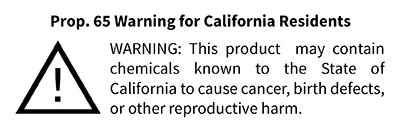
Seeing this kind of warning on a bottle of vitamins or a health supplement can feel alarming. How can a product meant to support your health contain dangerous chemicals? And why are California residents being warned? What about the rest of the United States? The story behind that warning is rather complex.
What Proposition 65 Actually Is
California’s Proposition 65 is state law which passed in the 1980s, giving consumers the right to know about exposure to chemicals the state determined may cause cancer, birth defects, or reproductive harm. The list now includes over 900 chemicals. The intent was good. But here’s where it gets interesting.
The Unattainable Threshold Problem
California set the threshold on cadmium at 4.1 mcg/d, and on mercury at 0.3 mcg/d, both of which are more restrictive than the standards set by US Pharmacopeia (USP) and Health Canada. But that’s not the biggest issue. It set its lead threshold at 0.5 mcg/d. This is 1/20th or only 5% of what the USP and Health Canada have concluded to be safe.

Why This Creates Issues for Natural Products
Lead, cadmium, mercury, and other trace elements occur naturally in soil and water within our environment. They are not intentionally added: our ecosystem inherently contains these elements. Because of this, supplements derived from herbs, mushrooms, algae, grains, roots, and other plant-based ingredients may contain these in trace amounts. Naturally grown vegetables like spinach, carrots, and sweet potatoes contain trace amounts as well, and they are considered safe to eat—but if they were to be measured against California’s threshold, they would require warnings.
The Practical Problem
Manufacturers are expected to test their products and label accordingly when selling into California. So numerous health products, globally accepted as safe, are shipped to California with dangerous-looking warning labels. Other health products that inadvertently reach California without warning labels could end up being targeted by advocacy groups. If they are flagged as failing to meet these unattainable thresholds, public disclosure can spread online, tarnishing a reputation before the brand even knows what happened. Either way, consumers are no closer to knowing what is truly safe to choose.

What Canadian Consumers Should Know
Detectable doesn’t equal dangerous. If you do see a Prop. 65 warning, ask yourself: What’s the actual exposure? And how does it compare to reliable Health Canada standards? Choose Canadian brands that manufacture responsibly and test thoroughly. And if you see alarming posts online about a product or brand, pause and look for context. Is this really a concern, or is it opportunistic noise?
Not all warnings carry the weight they appear to.